Case Study: Reducing Cap Cycle Time Through COMSOL-Optimized Cooling Channel Design
Case Study: Reducing Cap Cycle Time Through COMSOL-Optimized Cooling Channel Design
Published by cap-molds — China's Leading Precision Bottle Cap Mold Manufacturer & High-Speed Closure Tooling Specialist
Executive Summary: Solving Thermal Resistance in High-Speed Cap Molds
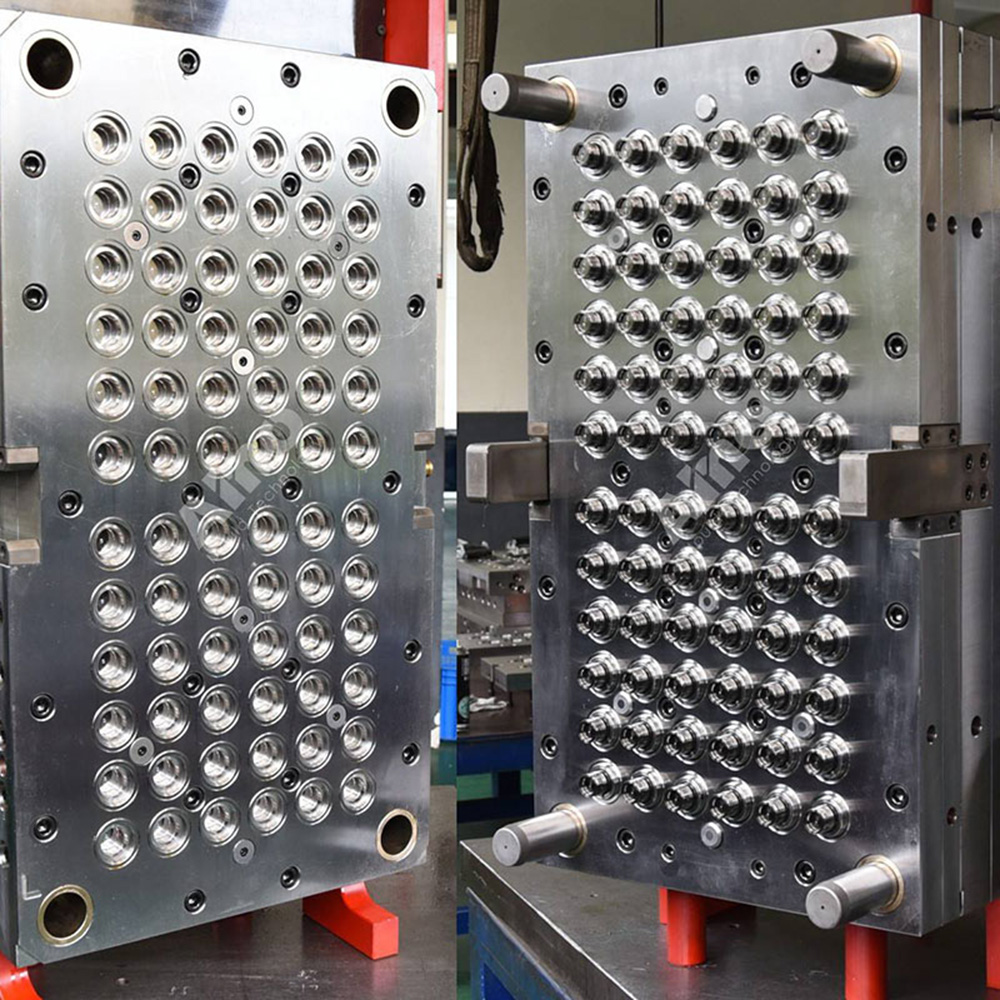
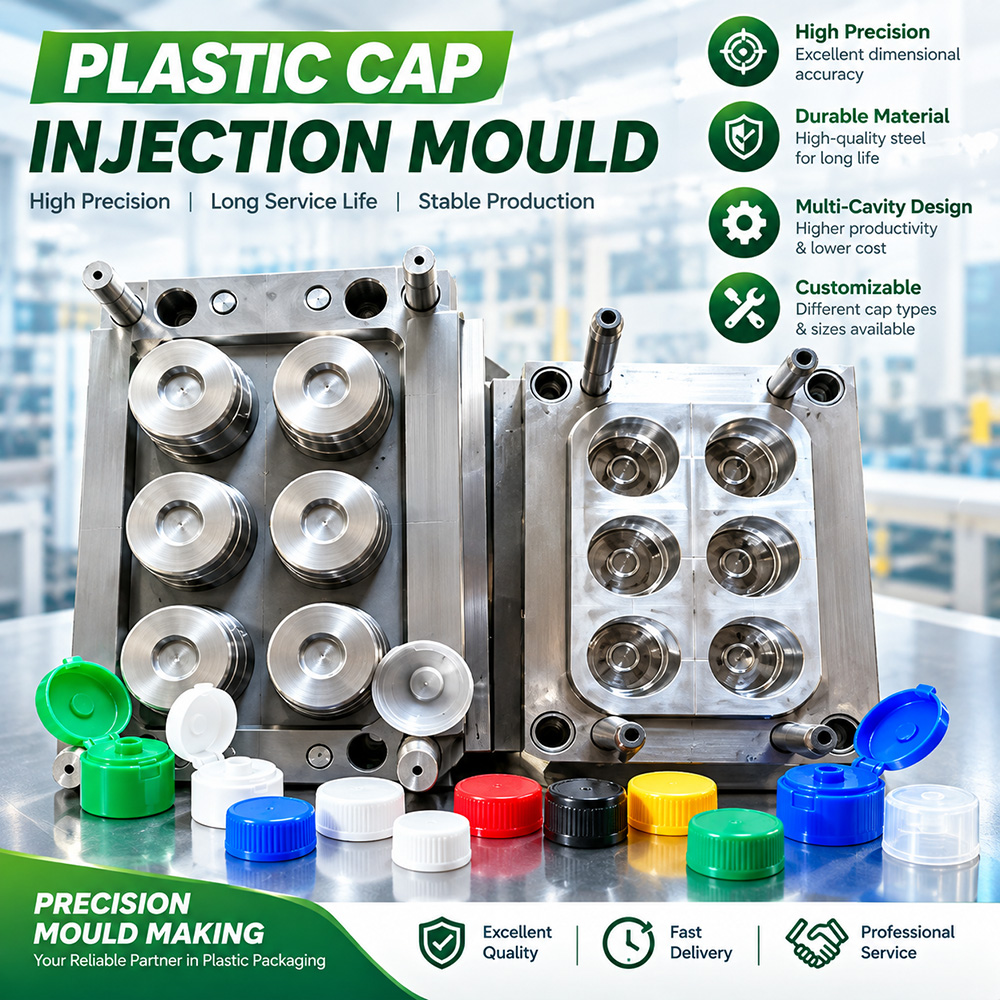
In high-speed beverage closure manufacturing, heat extraction is the single largest bottleneck governing production output and cycle efficiency. A tier-one global packaging supplier partnered with cap-molds to re-engineer an existing 72-cavity water cap mold that was capped at a 4.8-second cycle time due to severe thermal accumulation at the core tips and internal thread profiles.
Utilizing COMSOL Multiphysics finite element analysis (FEA) and Conjugate Heat Transfer (CHT) modeling, cap-molds redesigned the internal cooling topography using DMLS-printed 3D conformal cooling channels. The optimization reduced the overall cycle time to 2.8 seconds—achieving a 41.6% capacity increase while holding dimensional variation across all 72 drops within ±0.012mm.
1. Initial Bottleneck Identification & Thermomechanical Simulation
Conventional cap mold cooling relies on straight drilled lines, baffles, or copper-beryllium cores. However, as lightweight closure walls shrink to sub-millimeter scales, standard linear cooling paths leave significant thermal dead zones. Using COMSOL Multiphysics, cap-molds performed a comprehensive thermal-fluid analysis on the original tooling:
- Core Tip Thermal Stagnation: Surface temperatures at the core tip exceeded 118°C during continuous operation, delaying polymer solidification and causing thread drag during stripping.
- Laminar Flow Boundary Layering: Low fluid velocity within drilled channels yielded a Reynolds Number ($Re$) below 2,100, creating an insulating fluid layer that impaired conductive heat transfer.
- Asymmetrical Thermal Shrinkage: Thermal variance reached up to ±11.2°C across the cavity wall, causing rim warping and ovality defects whenever cycle time was pushed below 4.5 seconds.
2. COMSOL Multiphysics Optimization & Fluid Architecture
To eliminate localized heat sinks without compromising structural mold integrity under 1,400 bar injection pressure, cap-molds deployed parametric optimization routines in COMSOL to design dynamic conformal cooling channels.
| Thermal Engineering Parameter | Standard Drilled Tooling Baseline | cap-molds COMSOL Conformal Design |
|---|---|---|
| Cooling Path Topology | Linear drilled baffled channels | 3D helical micro-conformal channels matching thread contour |
| Channel-to-Cavity Proximity | 5.0mm – 7.5mm variable distance | Strictly uniform 1.8mm proximity |
| Coolant Flow Regime | Laminar / Transitional ($Re \approx 2,100$) | Fully Turbulent Flow ($Re > 4,800$) |
| Core Surface Temperature Delta ($\Delta T$) | ±11.2°C variance | Constrained within ±0.9°C across all drops |
3. Engineering Realization via DMLS & Direct Assembly Manufacturing
Once the optimal channel diameter, helix pitch, and pressure gradient were validated in COMSOL, cap-molds fabricated the core and cavity inserts via Direct Metal Laser Sintering (DMLS) using premium ESR Corrax stainless steel (HRC 48–52):
- Teardrop Channel Cross-Sections: Replacing circular cross-sections with engineered teardrop channels reduced hydraulic pressure loss by 32%, allowing high flow velocity without pump cavitation.
- Sub-Micron CNC Finishing: Printed inserts underwent high-speed 5-axis CNC machining and jig grinding, ensuring zero-bench-fitting direct assembly with parting line flatness within 0.008mm.
- Integrated Micro-Turbulators: Laser-etched internal channel walls induced micro-vortices, destroying the laminar boundary layer and elevating the convective heat transfer coefficient ($h$).
4. Industrial Production Validation & Operational ROI
Validation trials conducted on a fully electric 300-ton high-speed injection molding machine demonstrated outstanding operational gains:
- Cycle Time Reduced to 2.8s: Achieved a 41.6% cycle time reduction, expanding annual factory output by over 45 million caps on a single machine.
- Zero Cap Ovality & Warpage: Uniform thermal dissipation locked in bore seal concentricity, achieving a 100% pass rate under 6.0 bar carbonation leak testing.
- Rejection Rate Below 0.1%: Thermal flash expansion and thread stripping damage were completely eliminated, driving total scrap rates below 0.1%.
Partner with cap-molds for Precision Closure Engineering
At cap-molds, we integrate cutting-edge COMSOL multiphysics modeling, DMLS additive manufacturing, and Swiss sub-micron tooling standards. Whether you manufacture CSD closures, mineral water caps, edible oil caps, or sports closures, our engineering team delivers high-cavitation molds built for maximum output, extreme longevity, and minimal total cost of ownership.