Shuanghao's Guide to Achieving Zero-Defect Cap Sealing Surfaces
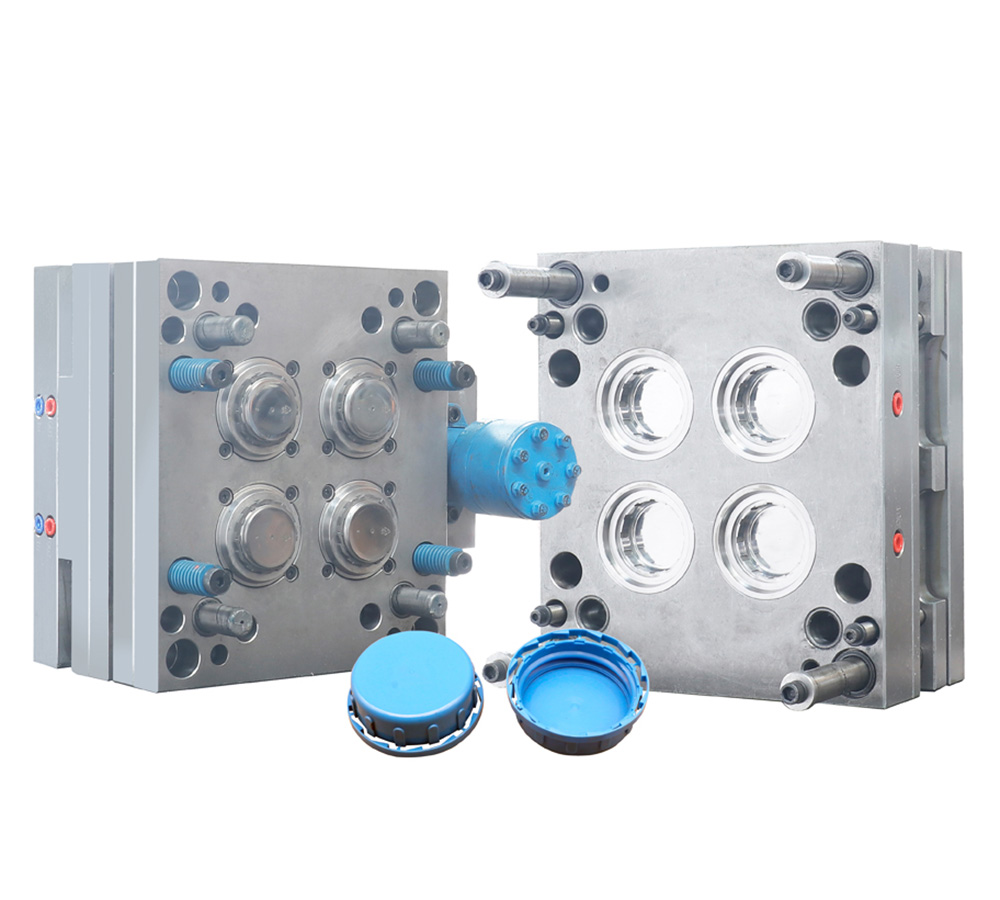
The sealing surface is the most critical feature of any bottle cap. It is the interface that prevents leakage, preserves product freshness, and maintains consumer trust. A defect on the sealing surface—no matter how small—can create a leak path that compromises the entire package.
Yet sealing surfaces are often treated as just another feature. They are machined, polished, and inspected with the same attention as decorative surfaces. This is a mistake. Sealing surfaces require exceptional precision, flawless finishes, and rigorous validation.
At Shuanghao, we treat sealing surfaces as a specialty discipline. This guide reveals our comprehensive approach to achieving zero-defect cap sealing surfaces.
Why Sealing Surfaces Matter
Before discussing solutions, it is essential to understand why sealing surfaces are so critical.
The Function of the Seal
The cap sealing surface compresses against the bottle's sealing surface (or a liner) to create a leak-proof barrier. This compression must be uniform around the entire circumference. Any gap, no matter how small, will allow leakage.
Surface defects such as scratches, pits, or sink marks create leak paths. Dimensional variation such as out-of-roundness or warpage prevents uniform compression. Rough surface finish allows fluid to wick through microscopic channels. Residue or contamination prevents proper sealing contact.
The Cost of Seal Failure
Seal failure leads to product leakage, creating mess and customer dissatisfaction. Product spoilage occurs when air or contaminants enter the package. Brand damage results from negative consumer experiences. Liability claims can arise from spoiled food or leaked chemicals. Regulatory action may follow repeated quality failures.
Types of Cap Seals
Different cap designs use different sealing mechanisms. Shuanghao's approach is tailored to each type.
Linerless Seals
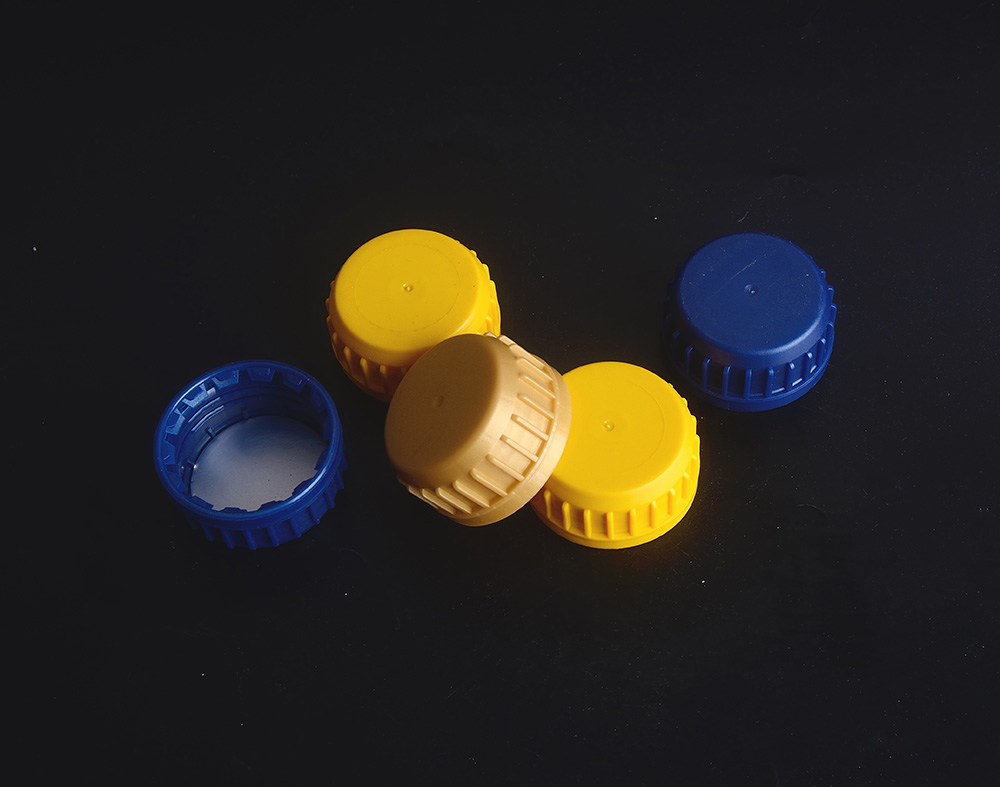
Linerless seals rely on the cap's own geometry to create the seal. The inner seal is a raised ring on the cap interior that compresses against the bottle's sealing surface. The top seal is the cap top panel pressing against the bottle rim. The plug seal is a cylindrical protrusion that fits inside the bottle neck.
Linerless seals require exceptional surface finish and dimensional accuracy because there is no liner to compensate for defects.
Liner Seals
Liner seals use a separate compressible material to create the seal. The liner seat is the surface against which the liner sits. The compression surface must be flat and smooth to distribute compression evenly.
Liner seals are more forgiving of surface defects but still require proper design.
Induction Seal Liners
Induction seals bond a foil liner to the bottle rim. The cap must hold the liner securely and provide compression for sealing. The compression surface must be flat and smooth.
Design Requirements for Zero-Defect Sealing Surfaces
Shuanghao's design guidelines for sealing surfaces are based on decades of experience.
Surface Finish Requirements
The required surface finish depends on the seal type. For linerless seals with no liner to compensate for defects, Shuanghao requires Ra 0.1 to 0.2 micrometers for critical sealing surfaces. For liner seals where the liner provides some compensation, Ra 0.2 to 0.4 micrometers is acceptable. For induction seals which bond to the bottle, Ra 0.2 to 0.3 micrometers is typical. For foil seals where the cap holds a separate membrane, Ra 0.4 to 0.6 micrometers may be acceptable.
Flatness Requirements
Sealing surfaces must be flat to ensure uniform compression. Total indicator reading variation around the circumference must be less than 0.05 millimeters. Radial flatness variations are typically specified at less than 0.03 millimeters.
Roundness Requirements
Out-of-round sealing surfaces create uneven compression with high and low points. Diameter variation must be less than 0.05 millimeters. Ovality must be within specified limits.
Surface Defect Limits
Shuanghao defines allowable defect sizes and frequencies. Scratches longer than a specified length are unacceptable. Pits deeper than a specified depth are unacceptable. Visible cracks or voids are completely unacceptable.
Mold Design for Sealing Surfaces
The mold cavity determines the sealing surface quality.
Cavity Design for Seal Areas
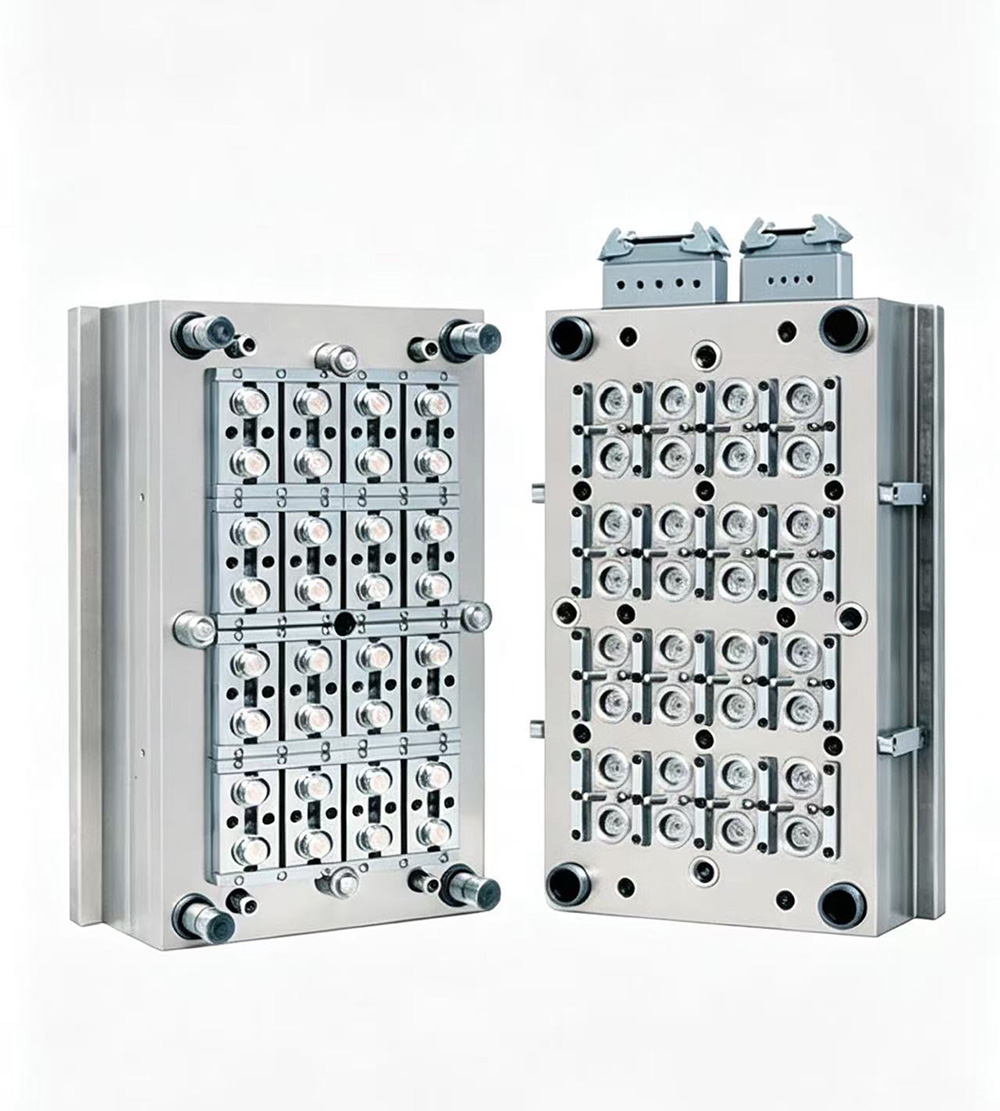
The cavity surface that forms the cap sealing surface must be flawless. Shuanghao designs sealing surface cavities with generous radii to avoid stress concentration. Sharp corners are eliminated at transitions. Gate placement avoids interference with sealing surfaces. Vent placement prevents air traps that could cause surface defects.
Steel Selection for Seal Areas
Sealing surface cavities require steel that polishes to high luster. S136 stainless steel provides excellent polishability. H13 tool steel also polishes well but may not achieve the same mirror finish. Shuanghao selects steel based on required surface finish and application.
Polishing and Texturing
Sealing surfaces typically require high-gloss polished finishes. Shuanghao achieves Ra 0.05 to 0.1 micrometers on critical sealing surfaces. Polishing direction is chosen to avoid creating leak paths. Mirror finishes provide smooth sealing contact. No texture is applied to sealing surfaces, as texture would create leak paths.
Manufacturing Precision for Sealing Surfaces
Precision manufacturing is essential for zero-defect sealing surfaces.
Machining Accuracy
Cavities that form sealing surfaces are machined with exceptional accuracy. Positioning accuracy of plus or minus 0.005 millimeters is required. Surface finish of Ra 0.1 micrometers or better is achieved. Cavity-to-cavity variation is held to 0.01 millimeters or less.
Single-Setup Machining
All features that affect sealing surface geometry are machined in a single setup. This ensures perfect geometric relationships. Threads, sealing surfaces, and tamper-evident features are all referenced to the same datum.
Inspection Verification
Every sealing surface cavity is measured using precision equipment. CMM inspection verifies dimensions. Surface profilometers measure finish. Optical comparators examine surface defects. Cavity-to-cavity comparison ensures consistency.
Processing for Sealing Surface Quality
Proper processing is essential for achieving sealing surface quality.
Melt Temperature
Melt temperature affects surface replication. Higher melt temperatures produce glossier surfaces but may cause degradation. Shuanghao recommends melt temperatures that fully replicate the cavity surface. PP melt temperatures of 200 to 220 degrees Celsius are typical.
Injection Speed
Injection speed affects how material fills the sealing surface area. Slower speeds may cause premature freeze-off and poor surface replication. Faster speeds produce better surface replication but may cause jetting. Shuanghao optimizes speed for complete fill and surface replication.
Packing Pressure
Packing pressure affects sealing surface dimensional stability. Higher packing pressure improves surface replication but may increase residual stress. Shuanghao uses packing pressure sufficient to maintain dimensions without over-packing.
Mold Temperature
Mold temperature affects surface finish replication. Higher mold temperatures produce glossier surfaces. Shuanghao recommends mold temperatures of 30 to 50 degrees Celsius for sealing surfaces.
Cooling
Uniform cooling prevents warpage that would compromise sealing surface flatness. Shuanghao's cooling systems ensure consistent temperature across the sealing surface area.
Quality Control for Sealing Surfaces
Comprehensive quality control ensures zero-defect sealing surfaces.
Inspection Methods
Visual inspection under controlled lighting reveals surface defects. Magnification of 5 to 10x is typically used. Dimensional measurement uses CMM for flatness and roundness verification. Surface finish measurement uses profilometers for Ra verification. Leak testing validates actual seal performance.
Sampling Plans
Shuanghao recommends sampling plans based on risk. For critical pharmaceutical or food applications, 100 percent inspection of sealing surfaces may be required. For less critical applications, statistical sampling may be adequate.
Statistical Process Control
SPC charts track key sealing surface parameters. Flatness trends indicate potential warpage issues. Surface finish trends indicate cavity wear. Cavity-to-cavity variation is monitored.
Common Sealing Surface Defects and Solutions
Problem: Scratches on Sealing Surface
Scratches create leak paths. Solutions include verifying cavity surface finish, checking for mold damage, inspecting for contamination, and reviewing part handling after ejection.
Problem: Sink Marks on Sealing Surface
Sink marks reduce sealing surface area. Solutions include optimizing packing pressure, increasing cooling time, reducing wall thickness variation, and adjusting gate location.
Problem: Out-of-Round Sealing Surface
Out-of-round surfaces create uneven compression. Solutions include balancing cooling circuits, verifying ejector system operation, checking for mold deflection, and confirming core-cavity alignment.
Problem: Poor Surface Finish (Dull)
Dull finish reduces seal effectiveness. Solutions include raising mold temperature, increasing melt temperature, verifying cavity polish, and checking for material degradation.
Problem: Flash on Sealing Surface
Flash interferes with seal compression. Solutions include verifying mold closure, checking for mold damage, reducing injection pressure, and confirming clamp force.
Real-World Results: Shuanghao Sealing Surface Customers
Customer Case: Carbonated Beverage Cap
A carbonated beverage manufacturer experienced intermittent leakage at 0.5 percent of caps. The leakage was traced to micro-scratches on the sealing surface from a damaged cavity.
Shuanghao repaired the cavity and implemented enhanced inspection. Leakage dropped to 0.02 percent. The customer reported annual savings of $200,000 from reduced product loss and customer complaints.
Customer Case: Pharmaceutical Cap
A pharmaceutical cap required zero defects for regulatory compliance. The customer needed documented evidence that every sealing surface was flawless.
Shuanghao provided mold with premium S136 steel, mirror-polished sealing surfaces, and comprehensive inspection documentation. The caps passed all regulatory requirements. The customer achieved FDA approval.
The Shuanghao Zero-Defect Sealing Surface Guarantee
Shuanghao's sealing surface expertise provides design guidance for optimal sealing surface geometry and finish. Precision manufacturing achieves cavity accuracy of plus or minus 0.005 millimeters. Mirror polishing achieves Ra 0.05 to 0.1 micrometers on critical surfaces. Process optimization ensures proper replication of cavity finish. Rigorous inspection verifies flatness, roundness, and finish. Comprehensive documentation supports quality requirements.
Conclusion: Flawless Sealing Surfaces, Reliable Caps
Zero-defect cap sealing surfaces are not optional. They are essential for product safety, brand reputation, and consumer trust.
Shuanghao's comprehensive approach to sealing surface engineering delivers design optimization with appropriate finishes, flatness, and roundness. Precision mold manufacturing with premium materials and flawless cavity surfaces. Process control that ensures proper replication. Quality inspection that verifies every sealing surface. Continuous improvement that maintains zero-defect performance.
Whether you produce carbonated beverage caps requiring pressure retention, pharmaceutical caps requiring regulatory compliance, or food caps requiring product freshness, Shuanghao has the expertise to deliver zero-defect sealing surfaces.
Choose Shuanghao. Choose zero-defect sealing surfaces. Choose reliable caps.