Goodbye High Maintenance Costs: How Shuanghao Modular Cap Mold Design Makes Repair Easier
For bottle cap manufacturers, mold maintenance is an unavoidable reality. Every mold, no matter how well built, will eventually need cleaning, component replacement, or repair. The question is not whether maintenance will be required, but how much it will cost and how long it will take.
Traditional mold designs treat maintenance as an afterthought. Replacing a damaged cavity can require disassembling half the mold. Sourcing replacement parts means waiting weeks for custom-machined components. Cleaning requires accessing hard-to-reach areas. The result is high maintenance costs, extended downtime, and frustrated maintenance teams.
At Shuanghao, we have reimagined cap mold design with maintenance as a primary consideration. Our modular approach makes repairs faster, parts more accessible, and ownership more cost-effective. This article explores how Shuanghao modular design reduces maintenance costs and keeps your production running.
The True Cost of Mold Maintenance
Before examining the solution, it is worth understanding the full cost of traditional mold maintenance.
Direct Maintenance Costs
Direct costs include labor hours for maintenance technicians, replacement parts and components, specialized tools and equipment, and outside repair services when in-house capability is insufficient.
Indirect Maintenance Costs
Indirect costs are often larger than direct costs but harder to measure. Production downtime during maintenance reduces output. Rush shipping charges for emergency replacement parts add expense. Quality issues following improper reassembly increase rejection rates. Expedited production to make up for lost time may require overtime or outsourcing.
Hidden Maintenance Costs
Hidden costs include inventory carrying cost for spare parts, training time for maintenance personnel, production scheduling complexity due to unpredictable downtime, and customer dissatisfaction from delayed orders.
Shuanghao's modular design addresses all these cost categories.
What Is Modular Mold Design?
Modular mold design treats the mold as a system of interchangeable components rather than a single monolithic structure.
Traditional Mold Design
In traditional cap mold design, cavities are machined directly into the mold plate. Removing a damaged cavity requires removing the entire plate, sending it to a specialty shop for repair, and waiting days or weeks for the work to be completed. During this time, the entire mold is out of service.
Modular Mold Design
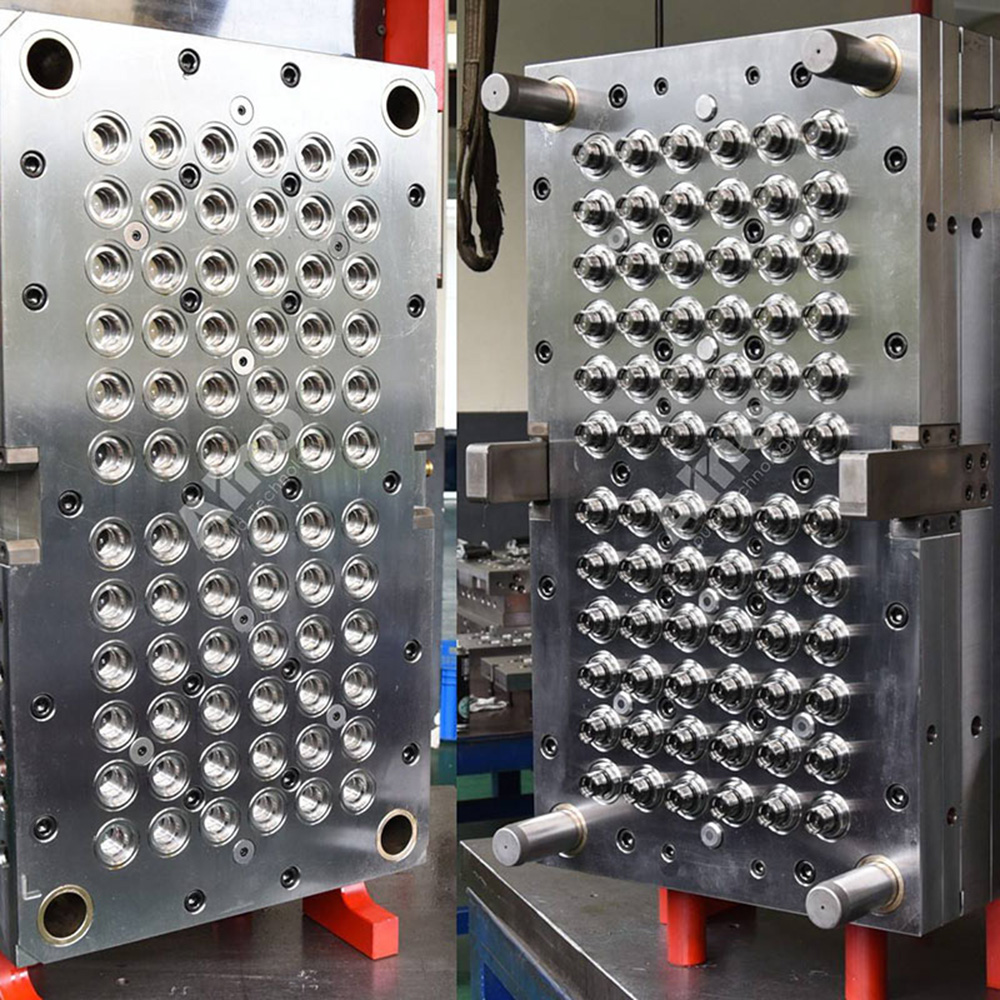
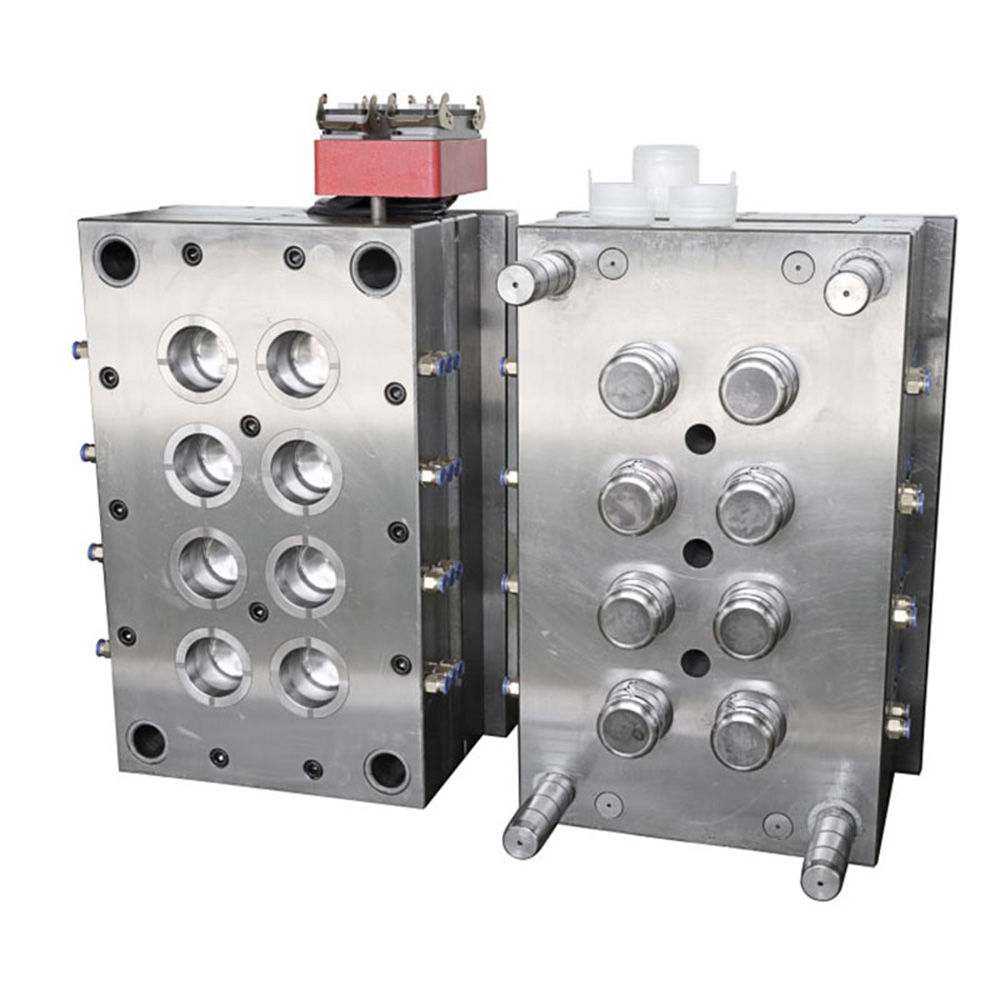
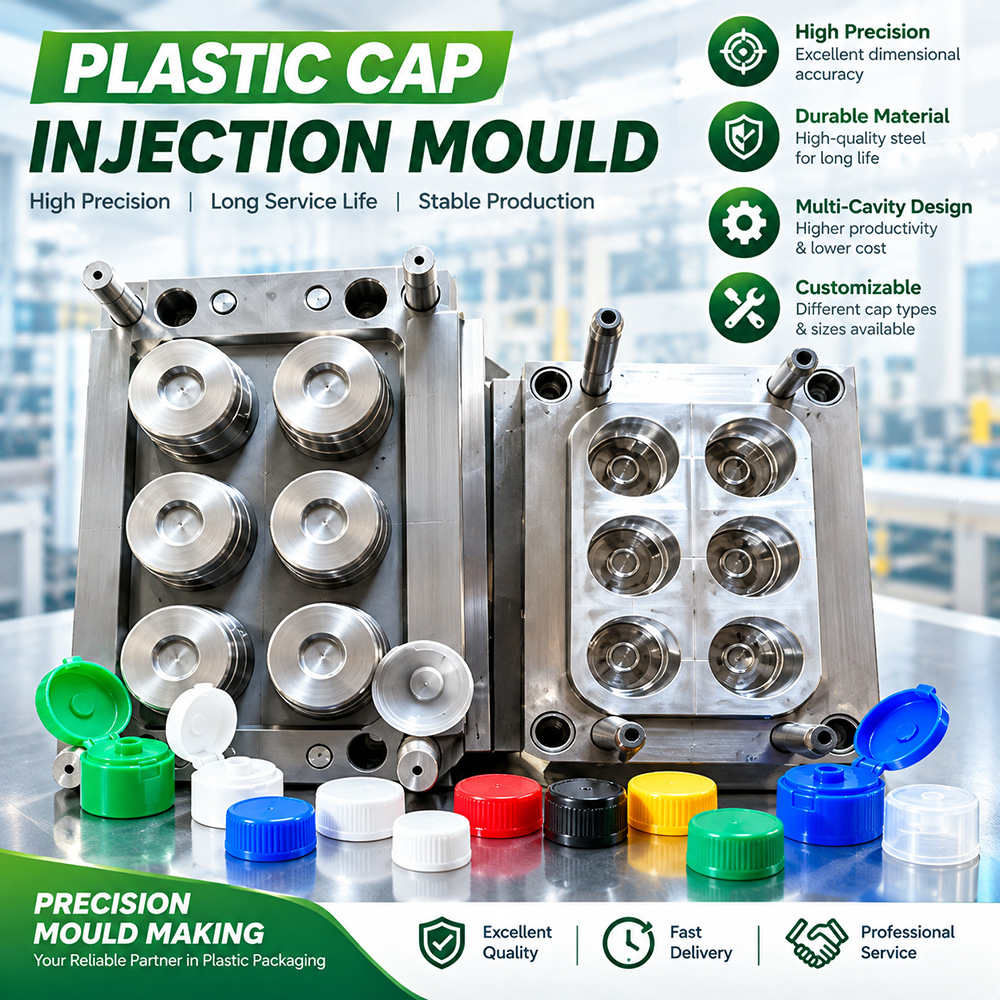
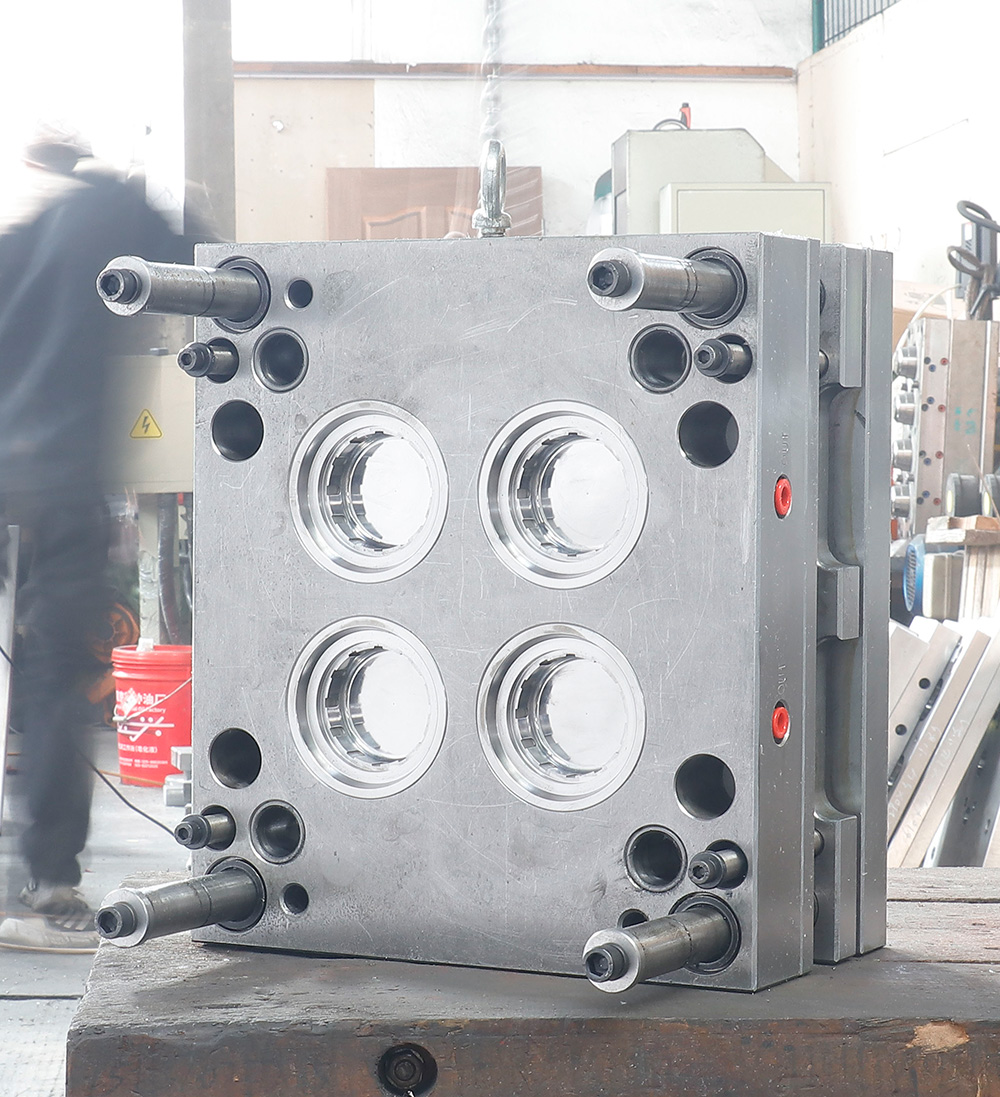
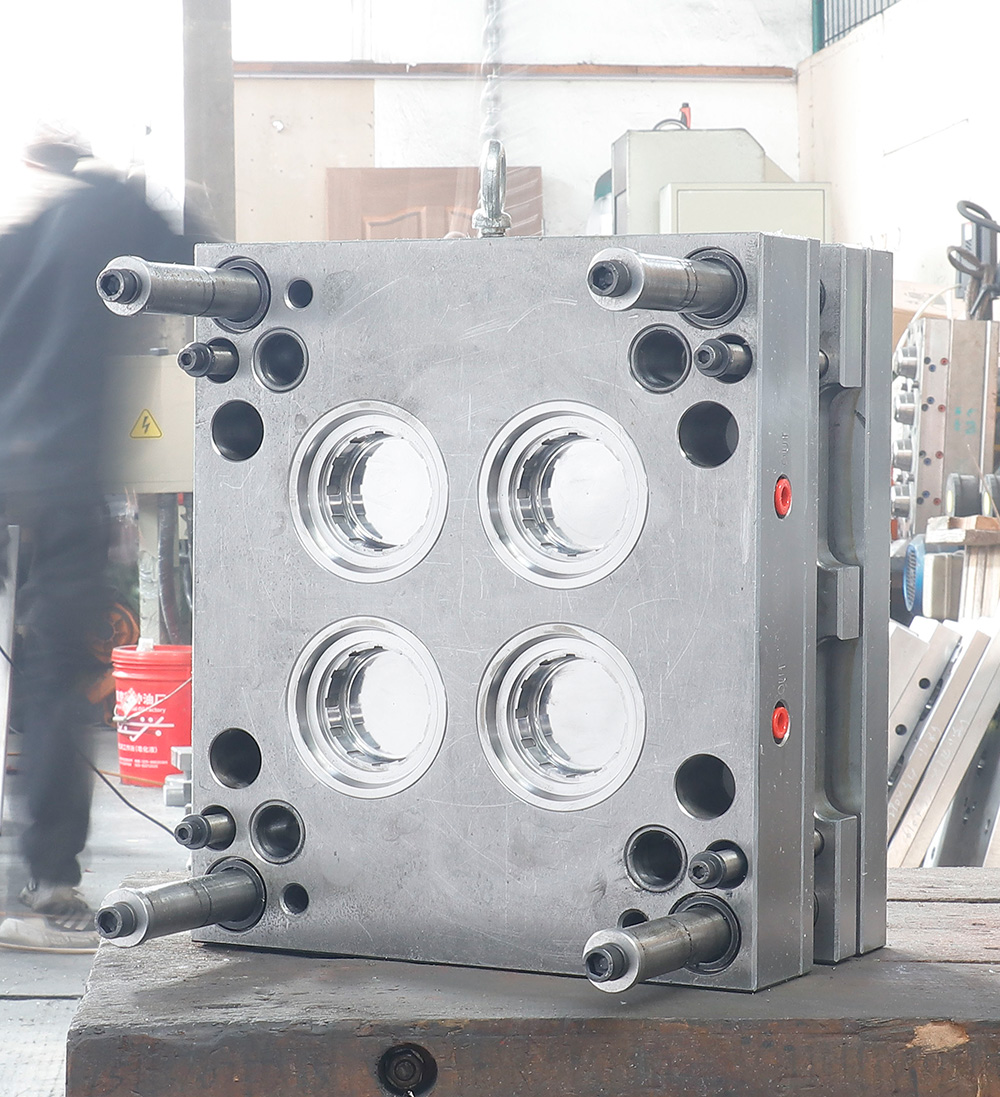
In Shuanghao's modular design, each cavity is a separate insert that fits into a standardized pocket in the mold plate. Damaged inserts can be removed and replaced in minutes using basic hand tools. The mold returns to service immediately while the damaged insert is repaired or replaced offline.
Shuanghao's Modular Components
Shuanghao's modular cap mold design uses standardized, interchangeable components across the entire mold.
Interchangeable Cavity Inserts
Each cavity is a precision-machined insert that fits into a standardized pocket. Cavity inserts are fully interchangeable, meaning any insert fits any cavity position. Replacement inserts are stocked as standard items, not custom-made to order.
Standardized Core Pins
Core pins that form the inside of the cap are also modular. Core pins can be replaced individually without disturbing adjacent cavities. Hardened wear surfaces extend core pin life between replacements.
Modular Hot Runner Components
Hot runner nozzles are individually removable without disassembling the entire manifold. Nozzle tips and heaters are standardized for quick replacement. Seals and gaskets are off-the-shelf items, not custom components.
Quick-Change Ejection Components
Ejector pins are accessible from the mold surface for replacement without disassembly. Ejector sleeves are modular and interchangeable across cavity positions. Return pins are standardized and stock items.
Maintenance Benefits of Modular Design
Benefit 1: Faster Repairs
In traditional molds, replacing a damaged cavity requires removing the mold from the machine, disassembling multiple plates, sending the cavity out for repair, waiting days or weeks, reassembling, and reinstalling. Total downtime is typically 3 to 10 days.
In Shuanghao modular molds, replacing a damaged cavity insert requires removing the mold from the machine, accessing the cavity insert from the back of the mold, removing the insert with basic tools, installing a replacement insert from stock, and returning the mold to service. Total downtime is typically 1 to 4 hours.
This represents a downtime reduction of 80 to 95 percent for cavity replacement.
Benefit 2: Lower Spare Parts Inventory
Traditional molds require unique spare parts for each cavity position. If a mold has 48 cavities, you need to stock 48 different spare parts if each cavity is unique. This drives high inventory costs and increases the risk of stocking the wrong part.
Shuanghao modular molds use identical cavity inserts across all positions. You only need to stock one spare part for all 48 cavities. Standardized components across different mold sizes further reduce inventory requirements. Inventory reduction of 70 to 90 percent is typical.
Benefit 3: Simplified Maintenance Procedures
Traditional mold maintenance requires specialized skills and training. Each mold is different. Procedures vary by mold design. Documentation is often incomplete. Maintenance mistakes are common and costly.
Shuanghao modular molds have standardized procedures across all molds. Simple tools are required, not specialized equipment. Clear documentation is provided for all maintenance tasks. Training time is reduced by 50 to 70 percent.
Benefit 4: Extended Mold Life
Traditional molds often reach end of life when critical components wear out. When cavities are machined directly into plates, worn cavities mean replacing entire plates. This is expensive and often leads to mold retirement.
Shuanghao modular molds have replaceable wear components. Cavity inserts can be replaced individually as they wear. Core pins, ejector pins, and other wear parts are easily replaced. The mold base can last indefinitely with component replacement. Mold life extension of 2 to 3 times is typical.
Preventive Maintenance Made Easy
Shuanghao's modular design also simplifies preventive maintenance.
Cleaning Access
Venting channels are accessible from the mold surface without disassembly. Cooling circuits have accessible ports for flushing. Hot runner components can be accessed without removing the manifold.
Inspection Access
Critical wear surfaces are visible without disassembly. Cavity condition can be inspected from the parting line. Core pins can be inspected without removing cavities.
Lubrication Access
Lubrication points are accessible from the mold exterior. Standardized lubrication fittings are used across all molds. Lubrication intervals are clearly documented.
Real-World Results: Shuanghao Modular Customers
Customer Case: Large Cap Manufacturer
A large cap manufacturer operating 20 molds was spending over 500 hours annually on mold maintenance. Cavity damage required sending molds to external shops for repair, with each event causing 5 to 7 days of downtime.
The company converted to Shuanghao modular molds for all new purchases and gradually retrofitted existing molds where possible.
Annual maintenance hours decreased from 520 to 180 hours, a 65 percent reduction. Downtime per cavity repair event decreased from 6 days to 4 hours. Spare parts inventory value decreased by 75 percent. The company estimated annual maintenance cost savings of over $150,000.
Customer Case: Custom Cap Manufacturer
A custom cap manufacturer producing short runs of many different cap designs needed frequent mold changes and maintenance. Traditional molds required significant downtime for design changes and component replacement.
The company adopted Shuanghao modular molds with interchangeable cavity inserts for different cap designs.
Changeover time between cap designs decreased from 4 hours to 45 minutes. Maintenance between production runs decreased from 2 hours to 20 minutes. The company was able to offer shorter minimum order quantities and faster delivery. Customer satisfaction scores improved significantly.
Maintenance Best Practices for Shuanghao Modular Molds
To maximize the benefits of modular design, Shuanghao recommends the following maintenance practices.
Preventive Maintenance Schedule
Daily maintenance includes cleaning venting channels, inspecting gate tips, and checking for visible wear or damage. Weekly maintenance includes lubricating moving components, inspecting ejector pins, and verifying cooling circuit flow. Monthly maintenance includes full mold cleaning, inspecting all cavity inserts, and checking hot runner temperatures. Quarterly maintenance includes replacing worn ejector pins, inspecting core pins for wear, and verifying alignment.
Spare Parts Management
Shuanghao recommends stocking 10 to 20 percent spare cavity inserts for high-volume molds. Stock 25 to 50 percent spare ejector pins. Stock 50 to 100 percent spare gate tips and seals. Stock complete sets of seals and O-rings.
Maintenance Documentation
Shuanghao provides comprehensive documentation with every modular mold. This includes exploded view drawings showing all components, part numbers for all replaceable components, maintenance procedures with step-by-step instructions, and lubrication schedules with recommended products.
Common Maintenance Questions
How long does it take to replace a cavity insert?
Replacing a cavity insert in a Shuanghao modular mold typically takes 30 to 60 minutes for an experienced technician. This includes removing the mold from the machine, accessing the insert, removing the damaged insert, installing the replacement, and returning the mold to service.
Do I need special tools for maintenance?
No. Shuanghao modular molds are designed for maintenance with basic hand tools. Standard hex wrenches, screwdrivers, and pullers are typically sufficient.
How do I know when to replace components?
Shuanghao provides wear limits for all consumable components. Regular inspection of critical components identifies wear before it affects part quality. Production data such as increasing rejection rates or torque variation can also indicate component wear.
Can I retrofit existing molds to modular design?
Some existing molds can be retrofitted with modular components, but the feasibility depends on the original mold design. Shuanghao offers retrofit assessment services to evaluate existing molds and recommend cost-effective upgrades.
The Shuanghao Modular Advantage
Shuanghao's modular cap mold design delivers significant maintenance cost reductions.
Faster repairs reduce cavity replacement downtime from days to hours, an 80 to 95 percent reduction. Lower spare parts inventory with standardized components reduces inventory value by 70 to 90 percent. Simplified maintenance requires less training and fewer specialized tools.
Extended mold life allows the mold base to last indefinitely with component replacement, extending life by 2 to 3 times. Reduced downtime keeps production running while maintenance is performed. Lower total cost of ownership reduces both direct and indirect maintenance costs.
Conclusion: Lower Maintenance Costs, Higher Productivity
Mold maintenance is inevitable, but high maintenance costs are not. Shuanghao's modular cap mold design reimagines maintenance from a costly interruption to a routine, low-impact activity.
Through interchangeable cavity inserts, standardized components, accessible design, and comprehensive documentation, Shuanghao modular molds reduce repair time from days to hours, cut spare parts inventory by 70 to 90 percent, simplify maintenance procedures, and extend mold life by 2 to 3 times.
Whether you operate a few molds or a few hundred, Shuanghao modular design can reduce your maintenance costs and keep your production running.
Choose Shuanghao. Choose lower maintenance costs. Choose higher productivity.